
I Used to Think Muscle Loss After 40 Was Inevitable. Then I Started Tracking What Happened.
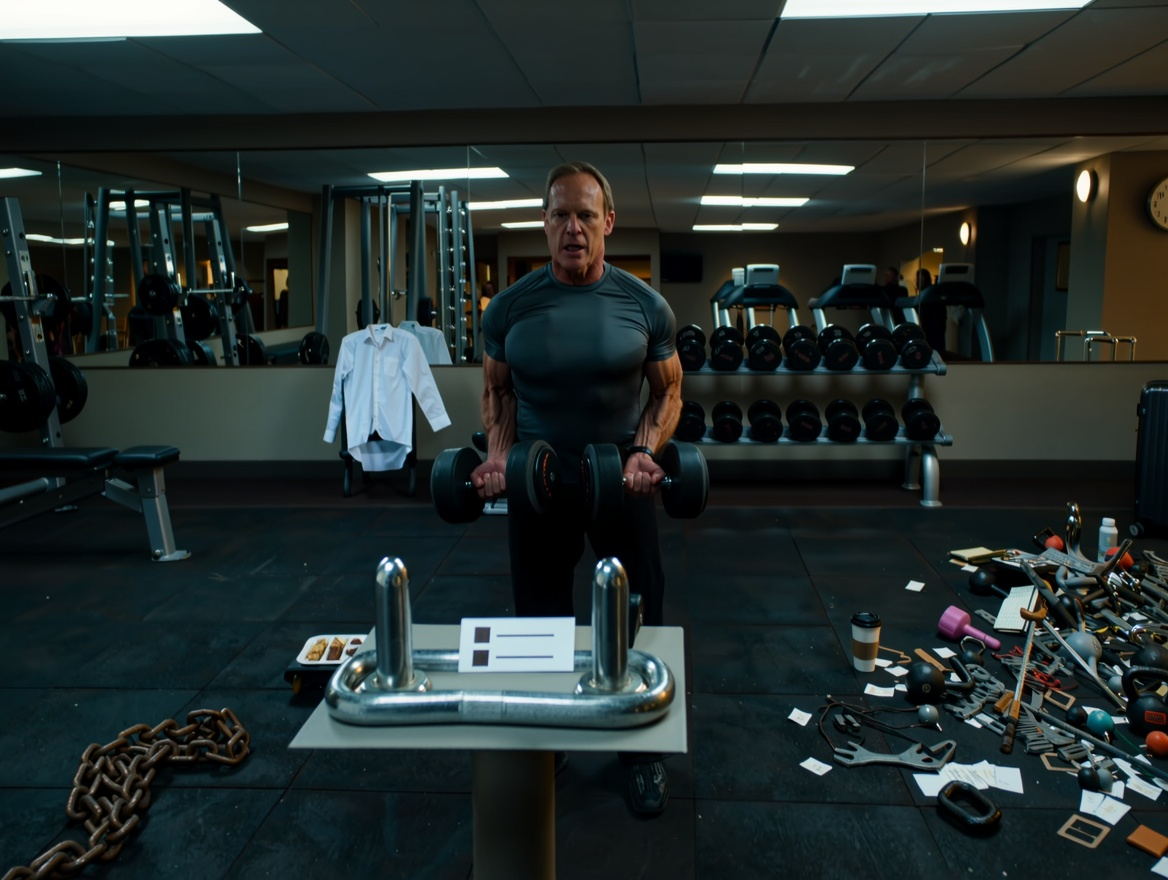
Late 40s. Travels constantly. Sleeps like garbage. Misses workouts.
After eight months, he wasn't just maintaining his strength. He was way stronger. Better body composition. Better numbers across the board.
Meanwhile, I had clients in their early to mid 40s showing up religiously, following every detail of their programs, quietly getting weaker.
Something wasn't adding up.
What separated them wasn't age, genetics, or time. It was one structural decision about how they approached loading. Once I saw it, I couldn't unsee it.
The Pattern That Broke My Belief
Two clients. Same age bracket. Same stress levels. Same demanding schedules. Same terrible sleep.
One kept getting stronger, more muscular, more resilient. The other kept training but was getting softer, weaker, beat down.
Here's what threw me: the stronger client wasn't doing anything fancy.
No perfect macros. No elaborate programming. No special supplements.
She was touching the same core lifts consistently. Keeping some heavy work in rotation even when life got messy. Treating recovery like a real constraint, not something to ignore.
The other client? Doing what most "age appropriate" advice tells you to do.
Lighter loads. More variety. More circuits. More "safe" work. They'd disappear whenever a week went sideways. The work looked hard, but the strength signal kept flickering on and off. The plan kept resetting.
If muscle loss after 40 were truly inevitable, these two people wouldn't have ended up so far apart.
The real story wasn't "your body is betraying you." It was "your plan isn't delivering a consistent enough stimulus, for long enough, under the conditions you're living in."
The Reality of Muscle Loss After 40
First, the bad news.
Without intervention, you're looking at 3 to 8% muscle loss every decade after 40. Accelerates after 65. The cross sectional area of your knee extensors alone drops 16.1% over 12 years from middle age to retirement.
No strength training? You're losing four to six pounds of muscle per decade. Most of it gets replaced by fat.
Now the good news.
Adults in their 70s, 80s, and even 90s build significant muscle mass and strength through appropriate resistance training. The adaptation mechanisms for muscle growth don't disappear. They need proper activation through progressive resistance exercise.
The difference isn't age. It's the signal you send.
The One Structural Decision That Changed Everything
Here it is: keep a non negotiable exposure to heavy, progressive tension year round, even when the week is chaos.
Not maxing out. Not grinding yourself into the ground.
At least one or two key lifts each week where the load is meaningfully heavy for you. Hard sets in a lower rep range, leaving a rep or two in the tank. The body keeps getting the signal: we still need this tissue.
What most over 40, high stress clients do when life gets busy?
They unconsciously switch to "easy but sweaty." Lighter weights, higher reps, more variety, more circuits. Feels productive. Easier to squeeze in. Less intimidating when you're exhausted.
Here's the problem.
The signal changes.
You're training fatigue tolerance instead of maintaining strength. Without the strength signal, muscle becomes optional. Your body has no reason to keep expensive tissue around if you're not using it in a way demanding preservation.
What the Tracking Revealed
The clients who kept strength didn't have perfect programs.
They had one rule: even in bad weeks, touch a heavy stimulus.
Volume drops. Sessions shrink. Accessories disappear. But the loading anchor stays.
The clients who lost strength? Not less disciplined. Their plan had no heavy anchor. When stress rose, training automatically slid into lighter, higher rep, random effort work. Over months, strength drifted down. When strength goes, the ability to hold onto muscle goes with it.
The difference wasn't genetics. Wasn't hormones. Wasn't supplements.
It was loading architecture.
Do you preserve the strength signal when life gets messy? Or does your plan quietly remove the signal the moment you need it most?
The Frequency Paradox
Here's where this gets counterintuitive.
You don't need six days a week to maintain muscle after 40.
Research shows two day a week training is as effective as more frequent sessions for older adults. In a study of 1,725 adults, both two day a week and three day a week groups added 3.1 pounds of lean muscle over 10 weeks. Same result. Less time.
Another study: once weekly resistance training was equally effective in increasing strength as two or three times weekly. One set of exercises performed once weekly to muscle fatigue improved strength as well as twice a week after 9 weeks.
The minimum effective dose delivers real results with far less time and volume than traditional plans assume.
The catch?
The minimum dose has to include meaningful loading. Light circuits three times a week won't cut it. Two sessions with progressive resistance will.
Why Most Programs Fail Under Pressure
Traditional programs break in a predictable chain when life gets volatile.
Volatility disrupts recovery. Degrades performance. Performance drops, so effort feels harder, pain signals louder. Higher perceived effort drives behavioral collapse through decision fatigue and "restart" psychology.
The data confirms this. Of those who dropped out of exercise programs, 67% did so before starting or while ramping up to prescribed volume and intensity. Most common reason? Lack of time.
Half of people who start an aerobic exercise program stop within six months.
But here's what matters: among individuals who completed the ramp period, adherence didn't waver over the next 6 to 8 months.
The problem isn't motivation.
Most programs have no survivable mode.
The Consultant Who Changed My Approach
Back to the consultant getting stronger through chaos.
What made the difference?
He had a floor.
We'd built his plan with a minimum version that still counted. Two lifts. A few hard sets. Twenty to twenty five minutes. When everything else collapsed, the anchor stayed.
Missed a session? He didn't restart. He did the next one.
Traveled? He found a way to hit those two movements with whatever equipment was available.
Stress high, sleep short? He still touched heavy weight at least once.
This single design choice stopped the restart cycle. The week could go sideways. The strength signal stayed.
Because the signal stayed in place long enough, adaptation accumulated. Not in perfect linear progression. But in the only way worth counting: over time, under real conditions, he got stronger.
What You Can Control After 40
Some things shift with age. You don't get to change them.
Recovery capacity narrows. You still recover, but the margin for error is smaller. One bad night or high stress week hits harder.
Hormones change. You don't choose your testosterone or estrogen trajectory. They influence energy, appetite, body composition.
Connective tissue stiffens. Tendons and joints prefer slower, more consistent loading than they did at 25.
But here's what you do control.
The big stuff determining outcomes.
Muscle retention and gain? You control this through progressive tension, adequate protein, consistent exposure to the main movement patterns.
Recovery? You control this behaviorally: sleep regularity, downshifting routines, caffeine timing, fueling, hydration, stress management.
How your joints feel? You control this by managing volume, range of motion, tempo, and exercise selection instead of avoiding load entirely.
Where most people waste energy?
Fighting the wrong battles.
They fight metabolism by piling on cardio, which increases fatigue and hunger while killing recovery. They fight hormones with supplements while ignoring sleep and stress. They fight aging joints by avoiding strength training, which makes joints worse because tissues stop getting the loading signal they need.
The Minimum Effective Approach
If you're over 40 and your life is volatile, here's what works:
1. Keep the strength signal alive.
At least one or two sessions per week with meaningful loading on the main patterns: squat, hinge, push, pull. Hard sets in the 6 to 10 rep range, leaving a rep or two in the tank.
2. Build a floor session.
A 20 to 25 minute version that still counts when life gets messy. Two lifts, a few hard sets, done. This is your survivable mode.
3. Protect recovery inputs.
Consistent wake time, a short shutdown routine at night, adequate protein. These aren't optional. They're inputs to the program.
4. Stop restarting.
When you miss a session, you don't go back to week one. You do the next session. Progress isn't linear. Progress doesn't require perfection.
5. Simplify the movement menu.
Repeatable movements you progress over time. Not variety for variety's sake. Not complexity adding cognitive load when you're already tired.
Research suggests you maintain muscle with as little as 6 to 10 sets per muscle group per week. Anecdotally, maintenance occurs on even less, perhaps 1 to 2 sets per muscle group per week.
The minimum effective dose is real.
But the dose has to include the right signal.
What I Learned the Hard Way
Muscle loss after 40 isn't inevitable.
But it's the default outcome when your training plan has no protective structure for the one thing mattering: consistent exposure to progressive tension.
Age isn't the enemy. Inconsistency is.
Inconsistency isn't a character flaw. It's a design problem.
Most programs assume stable inputs: predictable time blocks, steady energy, clean recovery, enough mental bandwidth to make good decisions after a long day. High pressure professionals don't live this way. They live in volatility. When the plan requires perfection to count, the first disruption breaks the chain.
The real skill isn't writing impressive programs.
It's designing systems keeping results coming when the inputs aren't stable.
This separates the clients who maintain and build strength after 40 from the ones who drift into the "age appropriate" trap of lighter, easier, more varied work feeling productive but quietly removing the signal their body needs.
If you're over 40 and you've been blaming your age for strength loss, look at your loading architecture first.
You might find the problem isn't your biology. It's your plan has no way to survive the life you're living.