What Actually Changes After 40 (And What You Can Still Control)
Everyone talks about what happens to your body after 40.
Slower metabolism. Harder to build muscle. Longer recovery. Hormones all over the place.
Most of the conversation stops at "here's what's changing" and never gets to the part you need: what do you do about it?
I've spent years watching clients in their 40s and 50s operate under two bad assumptions. First: decline is inevitable and you manage what you get. Second: you hack your way around biology with the right supplement stack or training protocol.
They're both wrong.
The real story is more useful. Some things do shift with age. But the things you control are still the big levers. The problem is most people waste energy fighting battles they won't win while ignoring the fundamentals completely within their control.
Here's what changes, what you control, and where to put your effort.
What's Outside Your Control
Let's start with the baseline shifts you get regardless of what you do.
Recovery Capacity Narrows
You still recover well after 40. The margin for error gets smaller.
A bad night of sleep or a high-stress week has a bigger downstream effect on soreness, performance, and how beat up training feels. Athletes over 40 require 1.5-2x longer recovery periods than younger counterparts due to reduced protein synthesis and slower circulation.
The system works. You need more precision in how you manage the inputs.
Hormones Shift
Hormone profiles change with age, but the part to focus on is variability.
You don't choose your testosterone or estrogen trajectory. You don't control menopause timing or thyroid quirks. Women's testosterone levels decline about 50% between ages 20-40, affecting muscle mass, bone strength, memory, and energy. Men see testosterone drop 1-2% per year after age 30.
These shifts influence energy, appetite, and body composition. They change how aggressive you get with calorie deficits and how your body responds to training stress.
But here's what matters: hormones are one variable in a system. They're not the only variable, and they're not the one you control most directly.
Connective Tissue Gets Stiffer
Tendons and joint structures prefer slower, more consistent loading and warm-ups than they did at 25.
You don't stop aging from happening to your connective tissue. But you influence how your joints feel by managing volume, range of motion, tempo, and exercise selection instead of avoiding load entirely.
Stiffness isn't a reason to stop training. It's a reason to train smarter.
What You Can Still Influence
This is where most people get it backwards. They obsess over the things they don't control while ignoring the fundamentals responding to consistent effort.
Muscle Retention and Growth
You influence muscle through progressive tension, enough protein, and consistent exposure to the main movement patterns.
Muscle mass declines from about 50% of total body weight in young adults to approximately 25% in individuals over age 80. But the decline isn't inevitable at the rate most people assume.
The clients I work with who maintain or build strength in their 40s and 50s aren't doing anything special. They're keeping a non-negotiable exposure to heavy, progressive tension year-round. Not maxing out. Not grinding. Meaningful loading in the core patterns: squat, hinge, push, pull.
When the signal stays consistent, muscle stays responsive.
Insulin Sensitivity and Body Composition
You influence insulin sensitivity and body composition through daily movement, resistance training, and diet quality.
Skeletal muscle is responsible for the majority of post-meal glucose disposal. When you lose muscle, you lose metabolic capacity. When you maintain muscle, you maintain the machinery keeping your metabolism functional.
This isn't about chasing a specific body fat percentage. It's about keeping the system working so your body processes nutrients efficiently.
Recovery Behaviors
You influence recovery behaviorally: sleep regularity, downshifting routines, alcohol and caffeine timing, fueling, hydration, and stress management.
Research shows during the first 3 hours of post-exercise recovery, young subjects showed a substantial increase in muscle protein synthesis rate, which was not observed in elderly subjects. But resistance training combined with protein intake still substantially stimulates net muscle protein accretion in older populations.
The system is slower. It's not broken.
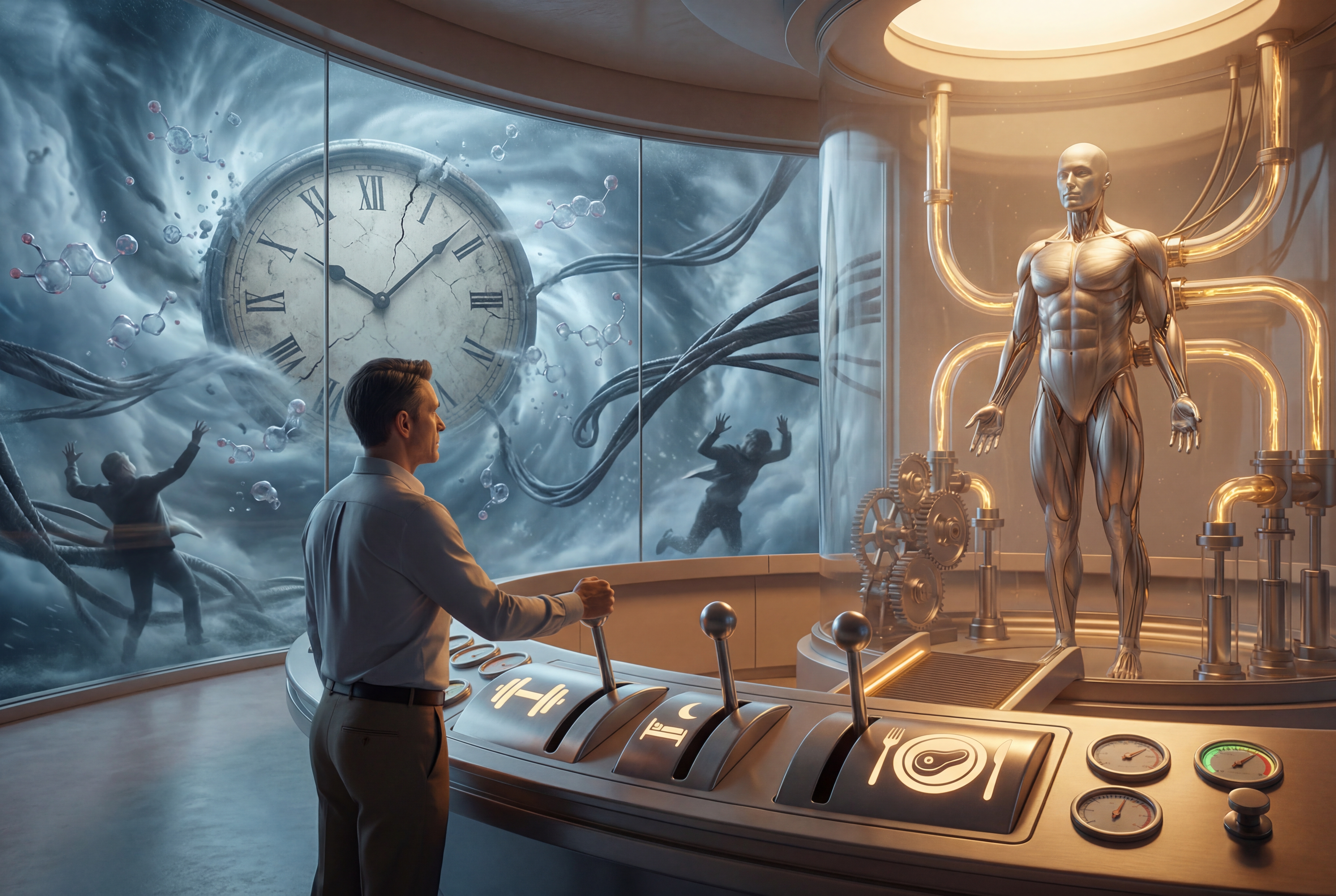
This means recovery inputs matter more, not less. Sleep quality, stress load, and fueling consistency become the bottleneck. If those inputs are unstable, you don't run a fixed progression and expect predictable adaptation.
How Your Joints Feel
You influence joint health by managing volume, range of motion, tempo, and exercise selection.
Most people think joint pain after 40 means "stop loading." The opposite is true. Joints need loading to stay healthy. They need the right dose, delivered in a way not exceeding tissue capacity.
That's not avoidance. It's precision.
Where People Waste Energy
Here's where the strategy falls apart for most people.
Fighting Metabolism With More Cardio
They fight "metabolism" by doing more and more cardio, which often increases fatigue and hunger while reducing recovery capacity.
Cardio has a place. But if you're under-recovered and add more cardio to try to "speed up your metabolism," you're stacking stress on a system already struggling to adapt.
Better move: protect muscle, manage total stress load, focus on the recovery inputs allowing adaptation to happen.
Chasing Hormones While Ignoring Fundamentals
They fight "hormones" with supplements and hacks while ignoring sleep, stress, and total intake consistency. The things moving the needle for most people.
Hormone optimization has value. But if your sleep is inconsistent, your stress is unmanaged, and your protein intake is all over the place, no supplement stack will fix the structural problems in your system.
Avoiding Strength Training to Protect Joints
They fight "aging joints" by avoiding strength training or only doing light circuits, which often makes joints worse over time because tissues stop getting the loading signal they need.
Joints need tension to stay healthy. Remove loading entirely, you remove the stimulus keeping connective tissue strong and resilient.
The solution isn't avoidance. It's appropriate dosing.
Brute-Forcing Consistency With Willpower
They try to brute-force consistency with willpower while running a plan that's too complex, too time-demanding, and too fragile for their life.
That's fighting biology.
Humans default to the easiest option under stress. If your plan requires perfect conditions to execute, it's not a plan. It's a fantasy.
The Line That Matters
You don't stop the baseline shifts in recovery and hormones.
But you control the quality and consistency of the stimulus you apply, and the recovery environment you create.
Most people lose years trying to hack what's hard to control while ignoring the fundamentals still completely within their influence.
The clients I work with who make progress in their 40s and 50s aren't doing anything extreme. They're not on perfect protocols. They're not running flawless weeks.
They're doing three things consistently:
One: They keep a meaningful loading stimulus in place, even when life gets messy. That protects muscle and strength.
Two: They treat recovery inputs as part of the plan, not optional lifestyle tips on the side. Sleep, stress management, and fueling get the same attention as training.
Three: They stop chasing perfect execution and start protecting consistent direction. The plan has a floor that still counts when the week goes sideways.
That's not fighting biology. That's designing around it.
And that's the difference between people who maintain strength and muscle after 40 and people who watch it slip away while blaming age.
What This Means for You
If you're over 40 and you've been told that decline is inevitable, you've been given half the story.
Some things do shift. The things you influence are still the big levers.
Stop wasting energy trying to hack hormones or outrun metabolism with more cardio. Start building a system that protects the strength signal, stabilizes recovery inputs, and survives the volatility of your actual life.
That's what works. And it's what keeps working when everything else stops.