
Why Your Meal Prep Keeps Failing (And What Works When Life Gets Messy)
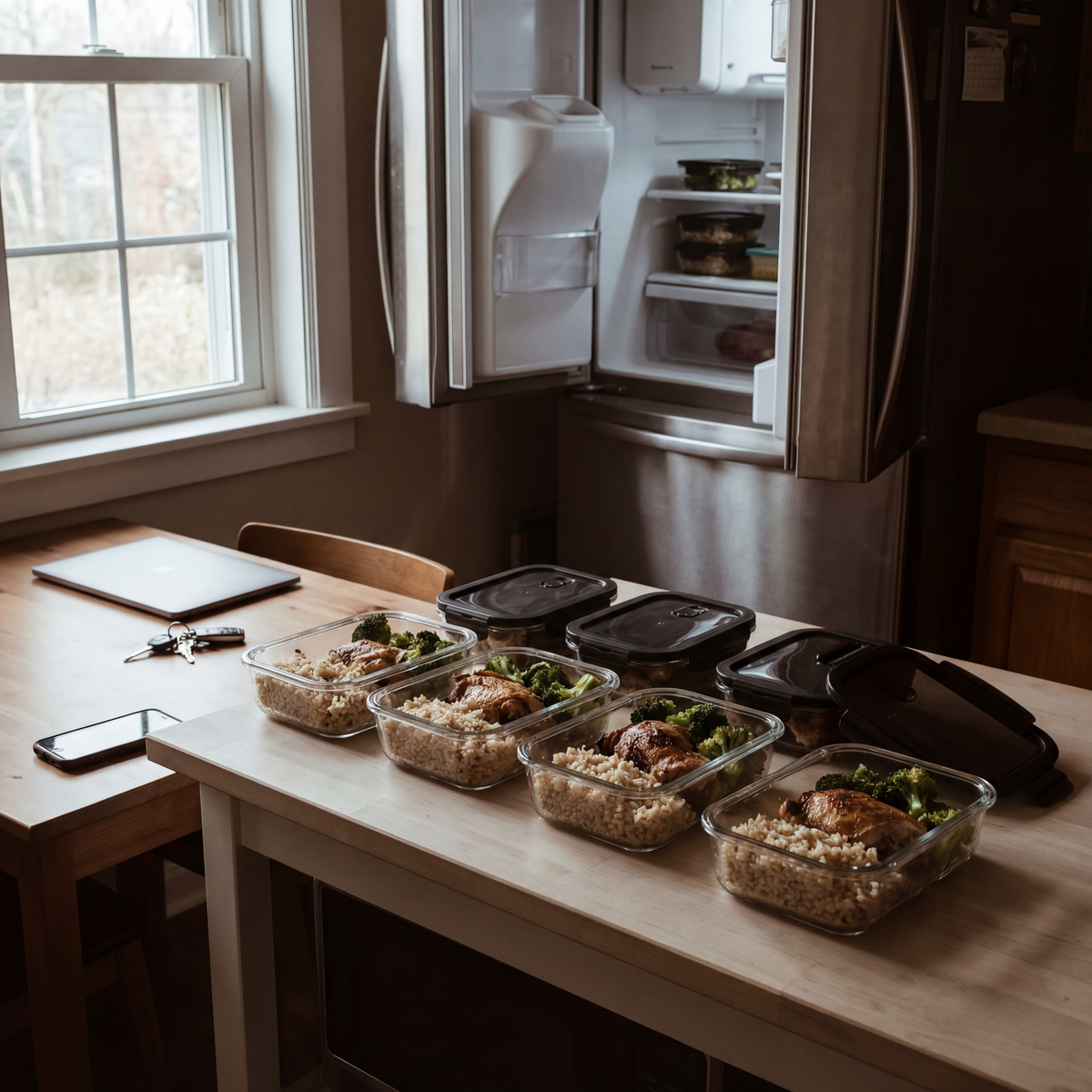
Sunday afternoon. Containers lined up. Chicken breast, rice, vegetables portioned into perfect little boxes. You feel organized. Prepared. Like you've finally figured this out.
By Wednesday, three containers sit untouched in the fridge. Thursday brings a late meeting and takeout. Friday you don't even remember what's in those containers anymore.
The problem isn't your discipline.
The problem is meal prep culture sold you a system designed for people whose weeks look nothing like yours.
The Sunday Prep Fantasy Assumes a Life You Don't Have
Most meal prep advice follows the same script: dedicate Sunday afternoon to cooking multiple recipes, portion everything precisely, and ride momentum all week. This works exactly once, on a calm weekend when nothing else demands your attention.
Then real life shows up.
A late flight pushes your prep window into Monday. Family plans take over Sunday. You're too tired after a brutal week to spend three hours in the kitchen. Decision fatigue hits before you start.
When prep doesn't happen, the entire plan collapses because the design was all-or-nothing. No prep equals no structure, and the week unravels fast.
I've watched this pattern destroy consistency for years. One executive told me, "I feel like I'm constantly failing a test I agreed to take." She wasn't lazy. She was operating inside a system assuming stability she didn't possess.
What Meal Prep Requires (That Nobody Mentions)
Traditional meal prep demands resources most busy professionals simply don't have anymore:
Uninterrupted time blocks. Three hours on Sunday sounds reasonable until you factor in travel, family obligations, or being mentally exhausted from the week.
Consistent energy levels. Cooking multiple recipes requires focus and physical stamina. When you're depleted, simple tasks feel overwhelming.
Predictable schedules. The system assumes you'll be home for lunch, dinner happens at the same time, meetings don't run late.
Emotional bandwidth. Making multiple decisions about recipes, ingredients, and portions drains mental resources you might need elsewhere.
The fitness industry treats these as minor obstacles. They're not. For people operating under sustained cognitive load with compressed time, these requirements make the system unworkable from the start.
Why the Guilt Compounds Faster Than the Containers
Here's what happens after the first failed prep week.
You see those containers in the fridge. Each one represents a promise you didn't keep. The guilt starts quietly: "I should have made time." Then builds: "If I couldn't do this, what's wrong with me?"
The next Sunday, you face a choice. Try again with the same system already failed, or abandon the whole idea. Most people try once more, fail again, then stop completely.
The shame spiral kills consistency faster than any logistical barrier. You stop trusting yourself to follow through, which makes starting again feel pointless.
I had a client who kept buying containers. Every few months, a new set. Each purchase was a fresh commitment, a reset button. The system never changed, so neither did the outcome.
The breakthrough came when we stopped treating meal prep as a character test and started treating the whole thing as a design problem.
The Alternative: Decision Architecture Instead of Discipline Theater
Instead of asking "Did you meal prep?" I build systems answering "What happens when prep doesn't happen?"
The shift is from dependence to defaults. From rigid plans to layered options. From all-or-nothing to always-something.
Here's how this works.
Tier One: Zero-Prep Defaults
These are meals requiring almost no thought or cooking and are always available. They're not backup options. They're first-class meals counting as success.
Examples:
• Rotisserie chicken, microwave rice, frozen vegetables
• Greek yogurt, fruit, granola
• Scrambled eggs, toast, pre-washed spinach
• Canned tuna, crackers, baby carrots
• Protein shake, banana, handful of nuts
The key is removing decision points. You don't choose these meals because you failed to prep. You choose them because they're easy and they work.
One founder told me this single shift changed everything: "I stopped feeling like I was cheating when I grabbed the rotisserie chicken. It was just dinner."
Tier Two: Light Prep
This is one or two components prepared ahead, not full meals. If this happens, great. If not, the system still holds.
Examples:
• A batch of protein (grilled chicken, ground beef, hard-boiled eggs)
• A pot of grains (rice, quinoa, pasta)
• Chopped vegetables stored in containers
• A simple sauce or dressing
You mix and match these with fresh items during the week. The effort is lower, the flexibility is higher, and nothing spoils if plans change.
Tier Three: Full Prep (Optional and Opportunistic)
This is the traditional Sunday prep. Multiple full meals portioned and ready to go. Here's the difference: this is never required for success.
If you have time, energy, and motivation, you do this. If you don't, you drop back to Tier Two or Tier One without guilt or system collapse.
The tiered structure means no single step is a failure point. The system assumes weeks will be messy. When you're tired, rushed, or traveling, the easiest choice is still a good one.
What Changes When the System Assumes Chaos
I worked with a finance executive who tracked everything religiously and kept failing at meal prep. His compliance was near perfect on paper, yet results were sliding.
We stripped the system down to Tier One defaults and one optional Tier Two component: batch-cook protein if he felt like this on Sunday.
Three things shifted immediately.
Decision fatigue dropped. He stopped negotiating with himself about what to eat. The options were clear and always available.
Guilt disappeared. There was no "right" or "wrong" choice anymore. Every tier counted as progress.
Consistency returned. Within three weeks, he was eating structured meals daily without drama. Energy stabilized. Results followed.
The system didn't demand heroics. The design quietly steered behavior in the right direction, on the worst weeks.
The Real Test: What Survives Disruption
Travel week. Sick kid at home. Project deadline. Late meetings. Poor sleep.
Traditional meal prep collapses under any of these conditions because this requires control to function. Tiered decision architecture survives because this uses disruption to prove strength.
When life gets messy, you don't abandon the system. You contract to a simpler version. Tier Three drops to Tier Two. Tier Two drops to Tier One. You stay in the game.
Continuity protects identity. You're still someone who eats well. You're still making progress. The narrative doesn't shift from "I'm on track" to "I've failed again."
One operations leader told me: "I used to think flexibility meant I was being soft on myself. Now I see this is the only reason I'm still consistent a year later."
How to Build Your Own Decision Architecture
Start with Tier One. Write down five to seven meals you make or assemble in under 10 minutes with ingredients you always have on hand.
Make them boring if they need to be. The goal isn't excitement. The goal is removal of friction.
Then identify one or two Tier Two components you could prep if time allows. A protein source. A grain. A vegetable. Not all three. Pick one.
Leave Tier Three optional. If full prep happens, great. If not, you already have a system working.
Test this for two weeks. Watch what happens when the week goes sideways. Does the system hold, or does this collapse?
If this holds, you've built something durable. If this collapses, simplify further until you find the threshold surviving your life.
Why This Works When Discipline Doesn't
Discipline is a finite resource. This depletes under stress, fatigue, and decision load. When you rely on discipline to maintain meal prep, you're betting your worst days won't happen.
They will.
Decision architecture doesn't ask for discipline. This designs the environment so the easiest choice is also the right one. You're not fighting yourself. You're steering yourself.
The containers stop piling up because you're not depending on them to carry the entire week. The guilt stops compounding because there's no binary success or failure.
What looks like consistency from the outside is a well-designed system quietly doing its job when motivation is low and life is loud.
This is the difference between meal prep working once and nutrition structure working for years.